

Wichtigste Erkenntnisse
- Die Wellenlänge ist entscheidend: Diodenlaser emittieren blaues Licht mit einer Wellenlänge von 455 ± 5 nm, CO2-Laser hingegen ferninfrarotes Licht mit einer Wellenlänge von 10,6 μm – ein Unterschied um mehr als das 20-Fache, weshalb die Materialabsorption völlig anders ist.
- Beim Schneiden dickerer Hölzer ist die Diodenlaseranlage von Vorteil: Die K70 Max ist für das Schneiden von 28 mm Paulownia in einem Arbeitsgang ausgelegt; die Master (CO2) erreicht maximal 13 mm Holzstärke.
- Acrylglas wird nach Transparenz unterteilt: opakes Acrylglas – Diodenprüfung bis 25 mm; transparentes Acrylglas – nur CO₂-Prüfung, Master-Prüfung bis 18 mm in einem Durchgang
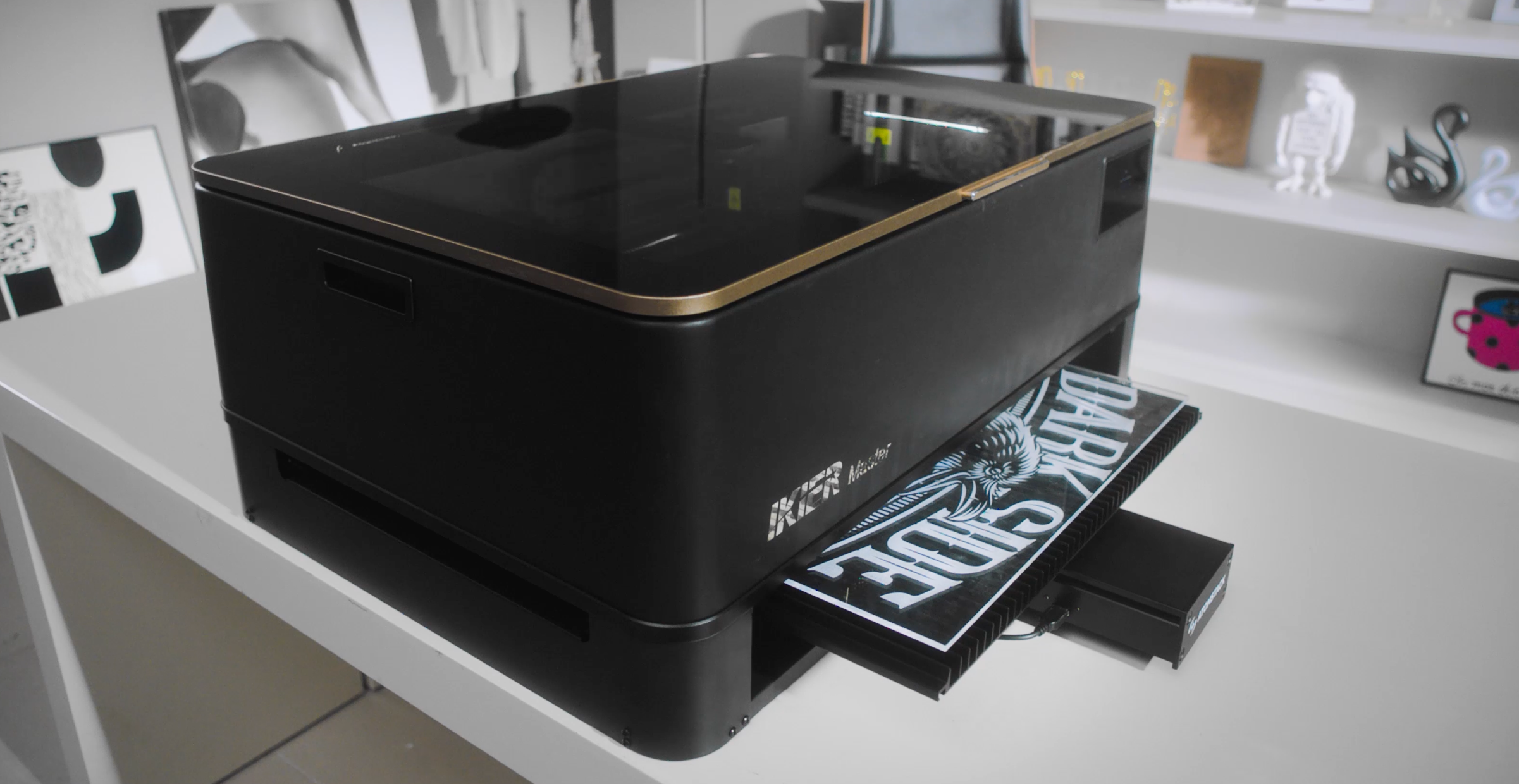
- Arbeitsbereich versus Tragbarkeit – das ist der versteckte Unterschied: Die 850×800 mm große Liegefläche des K70 Max bietet Platz für komplette Bettlaken; das ultraleichte Gehäuse des Master mit 28 kg ist eine Seltenheit in der kompakten Bauform der 50-W-CO2-Klasse.
- Preisanker: K70 Max ab 1.399 $ (UVP 1.499 $), Master ab 2.149 $ (UVP 2.399 $) – eine Differenz von etwa 750 $
Worin besteht der Unterschied zwischen einem Diodenlaser und einem CO2-Laser?
Ein Diodenlaser nutzt einen Halbleiter als Verstärkungsmedium – der iKier K70 Max emittiert blaues Licht mit einer Wellenlänge von 455 ± 5 nm. Ein CO₂-Laser verwendet Kohlendioxidgas als Verstärkungsmedium und emittiert ferninfrarotes Licht mit einer Wellenlänge von 10,6 μm. Die Wellenlängen unterscheiden sich um mehr als das 20-Fache, daher ist die Materialabsorption völlig unterschiedlich.
- Metall: reflektiert stark 10,6 μm – CO2 kann es ohne Beschichtung nicht verarbeiten; absorbiert 455 nm relativ besser, aber selbst die Diode ist auf Oberflächenmarkierungen auf Materialien in ihrer empfohlenen Liste beschränkt – keiner der beiden Wege ist eine gängige Metalllösung (d. h. 1064 nm Faser/IR).
- Transparentes Acryl: nahezu „unsichtbar“ bis 455 nm (keine Absorption), absorbiert 10,6 μm vollständig → nur CO2
Die richtige Frage lautet also nicht „Welcher Laser ist stärker?“, sondern: Was ist Ihr Hauptfach?
Metall, Acryl, Holz: Der direkte Vergleich
Vergleichbar mit den Nenndaten unserer beiden Maschinen (K70 Max: 70 W Schneiden/35 W Gravieren Dualmodus, 70–77 W tatsächliche Leistung; Master: 50 W CO2, optionales 1,6-W-IR-Modul):
| Material | Diode (K70 Max. Nennleistung) | CO2 (Master-zertifiziert) | Gewinner |
| Holzfällen | 28 mm Paulownia in einem Durchgang | Max. 13 mm | Dicke Schnitte: Diode |
| Undurchsichtiges Acryl | 25 mm in einem Durchgang | Acryl-Deckenplatte 18 mm | Diode |
| Transparentes Acryl | Verarbeitung nicht möglich (455 nm wird durchgelassen, keine Absorption) | 18 mm in einem Durchgang; physikalischer Autofokus mit Sonde, speziell für transparente Materialien entwickelt | CO2 |
| Metalloberflächenmarkierung | Empfohlene Werkstoffe: Edelstahl 304 (Spiegelglanz), oxidiertes Aluminium, plattiertes/lackiertes Metall (Oberflächenebene) | CO2-Quelle nicht anwendbar auf Metall; optional 1.6-W-IR-Modul in Edelstahl, Gold, Silber, Platin, Titan | Relativer Vorteil: Diode; Standardlösung: 1064-nm-Faser/IR |
| Glas/Keramik | Oberflächengravur (empfohlene Materialien: Glas, Keramik, Schiefer; Glas benötigt in der Regel eine dunkle Beschichtung zur besseren Absorption) | Oberflächengravur: Schnelle Oberflächenerhitzung erzeugt eine mikroskopische Rissbildung – kein Schneiden (Liste umfasst Glas, Gestein) & Keramik) | Oberflächengravur: CO2 ist direkter; Glasschneiden: keines von beiden. |
| Leder | Die Liste der empfohlenen Gravuren umfasst Leder. | Die Kompatibilitätsliste umfasst Leder. | Beide funktionieren |
Ein kontraintuitives Urteil: Weder Diode noch CO2 gewinnen die Metallrunde – die Diode hat nur einen relativen Vorteil; die wahre Antwort ist 1064nm Faser/IR.
- Ein weit verbreiteter Irrtum ist die Annahme, dass ausreichend Leistung (70 W Diode oder 50 W CO2) jedes Metall behandeln kann.
- CO2: 10,6 μm wird von Metallen stark reflektiert – die CO2-Quelle selbst kann Metalle nicht verarbeiten.
- Diode: 455 nm absorbiert relativ gut, jedoch nur zur Oberflächenmarkierung auf Materialien der Empfehlungsliste – Edelstahl 304 (Spiegelglanz), oxidiertes Aluminium, galvanisiertes/lackiertes Metall (Markierung, nicht Schneiden); hochreflektierendes blankes Aluminium, Kupfer und Edelmetalle sind ungeeignet.
- Die wahre Antwort für ein Metallunternehmen: die 1064-nm-Route – unsere K1 Pro 1064nm 20W Faserlaser (zum Schneiden von 0,2 mm dicken Aluminiumkarten geeignet) oder das Master-Modell mit dem 1,6-W-IR-Modul (separat erhältlich, geeignet für Gold, Silber, Platin und Titan); wenn Sie hauptsächlich Metall verarbeiten, verwenden Sie am besten Glasfaser.
- Die eigentliche Aufgabe der Diode: Holz und undurchsichtiges Acrylglas als Hauptanwendungsgebiet, wobei leichtere Beschriftungsaufträge für Namensschilder aus Edelstahl aus der empfohlenen Liste an der Seite übernommen werden; transparentes Acrylglas liegt außerhalb des Anwendungsbereichs der Diode – siehe Tabelle oben.
Grenzen jenseits der Wattzahl:
- Durchschlagskraft = tatsächliche optische Leistung + Fokussierung + Luftunterstützung im Zusammenspiel – beurteilen Sie die Wirkung niemals allein anhand der Nennleistung in Watt.
- Bestätigung durch Dritte: hobbylasercutters.com Wir haben bei unserem K1 Pro Max mit gleicher Architektur eine optische Ausgangsleistung von 70–77 W gemessen – im Bereich der Spezifikation oder leicht darüber (Befunde basieren auf Geräten mit gleicher Architektur, nicht auf einem Gerätetest des K70 Max).
Kosten, Arbeitsbereich und Instandhaltung: Zwei Eigentümerstrukturen
| Artikel | K70 Max (Diode) | Master (50W CO2) |
| Preis (UVP) | 1.499 $, jetzt statt 1.399 $ | 2.399 $, jetzt statt 2.149 $ (Vorverkauf) |
| Lichtquelle & Instandhaltung | Halbleitermodul, luftgekühlt, fester, justierfreier optischer Pfad | Das CO2-Glasröhrchen ist ein Verbrauchsmaterial; FlyLock optische Pfadstabilisierung — 99.7 % Stabilität, keine Neuausrichtung nach dem Transport |
| Arbeitsbereich | 850 × 800 mm | 500 × 300 mm, erweiterbar auf 500 × 800 mm mit Förderband |
| Höchstgeschwindigkeit | 600 mm/s | 800 mm/s |
| Körper | Großrahmen aus Vollmetall + zweiachsige Linearführungen, offen (optionales E3-Gehäuse) | Vollständig geschlossenes Fahrzeug der Klasse 1, 28 kg ultraleicht (862×584×255 mm) |
| Offline-Betrieb | 4,3-Zoll-Display, USB-/WLAN-Übertragung | 5-Zoll-Touchscreen + 16-MP-Kamera, Plug-and-Play-USB |
| Sicherheit | Kindersicherung, Flammensensor, Kippsicherung | Flammenüberwachung, Deckel-Offen-Pause, Kindersicherung |
Lesen der Kostentabelle:
- Die Preisdifferenz von ca. 750 US-Dollar ermöglicht es, das Master-Modell zu erwerben, das folgende Merkmale aufweist: die Möglichkeit, transparente Materialien zu verwenden, vollständig geschlossene Sicherheit und Tragbarkeit.
- Wofür die K70 Max ihr Budget ausgibt: das 850×800mm Bett + Durchstanzen von dickem Material
- Wartung: FlyLock beseitigt die herkömmliche, mühsame Ausrichtung des CO2-Spiegels; die Verschleißteile des Glasrohrs bleiben ein langfristiger Kostenfaktor, den die Diodenlösung nie hatte.
Wann sollten Sie sich für einen Diodenlaser (K70 Max) entscheiden?
Wenn Ihre Hauptmaterialien Holz und undurchsichtiges Acryl sind (Metall nur für die empfohlene Beleuchtungsliste), sollten Sie auf Dioden setzen. Etsy-Trenddaten (wöchentliche Momentaufnahmen, Mai–Juni 2026) zeigen, dass für jedes dieser beiden Materialien aktuell ein reales, im Handel erhältliches Gehäuse existiert:
Fall 1: Wood – Handabdruckschilder zum Vatertag
- Auflistung: Schild „Der mit Abstand beste Papa aller Zeiten“ (individuelles Holzschild mit Handabdruck), ab 11,95 $
- Marktdaten: 298,6 Tsd. kumulierte Ladenverkäufe (9 Jahre Bestehen), 8 Käufer in den letzten 24 Stunden
- Geschäftslogik: Personalisierte Weihnachtsgeschenke sind ein Dauerbrenner; Konturschnitt + Handabdruck-/Namengravur auf einer wiederverwendbaren Vorlage – ideal für die Serienfertigung.
- Technische Daten exakt abgestimmt: 70 W/35 W Dualmodus, Ein-Klick-Umschaltung – kein Entscheiden zwischen Schneiden und Gravieren nötig.
Fallbeispiel 2: Opakes Acryl – Firmenlogoschilder (ein Beispiel für die Eröffnung eines neuen Geschäfts)
- Auflistung: Individuell gestaltetes Firmenlogo-Schild (lasergeschnittenes Acrylglas), 15 $
- Marktdaten: 258 Verkäufe in den ersten 5 Monaten des Shops, aktuell in über 20 Warenkörben.
- Geschäftslogik: Beschilderung für kleine B2B-Händler ist ein wiederkehrendes Auftragsgeschäft, in das auch ein neu eröffnetes Geschäft einsteigen kann – die ersten fünf Monate zeigen, dass die Eintrittsbarriere in der Maschinenkapazität liegt, nicht in der Geschäftsdauer.
- Strenge Spezifikationen: 25 mm dicke, blickdichte Acrylglasdecke, Gravurgenauigkeit 0,01 mm
Was die beiden Fälle gemeinsam haben: Zwei Materialien, drei Produktlinien, alle innerhalb der Leistungsliste der Diode.Das entspricht unserem K70 Max: Autofokus mit einem Klick + Rotlichtpositionierung, automatisches Senkschneiden für sauberere Kanten, stufenlose Luftunterstützung von 0–60 l/min, 4,3-Zoll-Display für Offline-Arbeiten und volle LightBurn/LaserGRBL-Kompatibilität. Maschine ab 1.399 $ (UVP 1.499 $); Komplettpakete mit Gehäuse, Luftreiniger und Drehtisch 1.499–2.399 $.
Eine ehrliche Grenze: Die oben genannten Zahlen sind Nachfragedaten von Etsy (wöchentliche Trendübersichten; Shop-Umsätze sind kumulativ, nicht pro Artikel). Sie belegen, dass sich diese Produktkategorien gut verkaufen – ob Sie Gewinn erzielen, hängt jedoch weiterhin von Auftragseingang, Preisgestaltung und Kapazität ab. Dieser Artikel gibt keine Einkommensversprechen.
Wann sollten Sie sich für einen CO2-Laser (Master) entscheiden?
Wenn Ihre Hauptprodukte auf transparenten Acryl- und Glasoberflächen graviert werden, sollten Sie direkt auf CO2-Gravur umsteigen. Ebenfalls aus den Etsy-Trenddaten:
- Transparentes Acryl: Hochzeitspostkartenbox (Acryl-Kartenbox), ab 32,99 $, 47.400 kumulierte Shop-Verkäufe (6 Jahre Shop-Bestand), über 20 Aufrufe in den letzten 24 Stunden
- Glas: Lasergravierte Pintgläser mit Goldrand, 4er-Set, ab 39,95 $, kumulierter Umsatz im Geschäft: 203,6k (11 Jahre Bestehen)
Unsere Antwort auf diese Frage lautet: Master 50W CO2 (ab 2.149 $, UVP 2.399 $): 18 mm transparentes Acrylglas in einem Durchgang, 800 mm/s, 16-MP-Kamera für Stapelpositionierung; das ultraleichte, kompakte Gehäuse mit nur 28 kg (vergleichbare Geräte wiegen 41–45 kg) macht es zum portabelsten Gerät seiner Klasse (50 W CO₂-Drucker) – ideal für Märkte, Pop-up-Stores und individuelle Anpassungen vor Ort. Mit dem optionalen 1,6-W-IR-Modul lassen sich Markierungen auf Edelstahl, Gold, Silber, Platin, Titan und ABS/PC-Kunststoff realisieren.
5 Schritte zur Auswahl: Maschine an Ihre Materialliste anpassen
- Listen Sie Ihre wichtigsten Produkte und Materialien für die nächsten 12 Monate auf (nutzen Sie die Bestseller-Daten der Plattform, nicht Ihr Bauchgefühl).
- Gravur auf transparenter Acryl- oder Glasoberfläche (siehe Liste) → CO2-Lampe erforderlich; keine → zuerst Diode verwenden
- Prüfen Sie die Schnittstärke: Bei Holzbearbeitungen über 13 mm ist die CO2-Schneidetechnik nicht mehr geeignet – Sie benötigen eine Diode der 70-Watt-Klasse.
- Arbeitsbereich und Einstellungen prüfen: Für Arbeiten im DIN-A4-Format wird ein Format von 850 × 800 mm benötigt; für mobile Unternehmen ist das 28-kg-Format erforderlich.
- Die Gesamtbetriebskosten sind überschaubar: Das Glasröhrchen wird in die CO2-Kolonne eingeführt; die Diode ist luftgekühlt und justierfrei.
Häufig gestellte Fragen
Frage 1: Kann ein Diodenlaser transparentes Acryl schneiden?
A: Nein. Blaues Licht mit einer Wellenlänge von 455 nm durchdringt transparentes Acrylglas ungehindert – die Energie wird nicht absorbiert. Für transparentes Acrylglas wird ein CO₂-Schneidegerät benötigt (Master-Standard, 18 mm in einem Durchgang, mit physikalischer Sonden-Autofokussierung). Bei opakem Acrylglas ist es umgekehrt: Eine Diode schneidet 25 mm (K70 Max-Standard), was über die maximale Schnitttiefe des CO₂-Schneidegeräts von 18 mm hinausgeht.
Frage 2: Kann man mit einem CO2-Laser Metall gravieren?
A: Die CO₂-Quelle selbst kann Metall nicht gravieren (10,6 μm werden stark reflektiert). Eine Diode kann nur Materialien der empfohlenen Liste oberflächenmarkieren (Spiegel-Edelstahl 304, oxidiertes Aluminium, beschichtetes/lackiertes Metall) – Markieren, nicht Schneiden; blankes Aluminium, Kupfer und Edelmetalle sind nicht geeignet. Wenn Sie hauptsächlich Metall bearbeiten, verzichten Sie auf beides: Wählen Sie unsere K1 Pro 1064-nm-Faser (geeignet zum Schneiden von 0,2 mm dicken Aluminiumkarten) oder ergänzen Sie diese mit dem Master 1,6-W-IR-Modul (zum Markieren von Gold, Silber, Platin, Titan und Kunststoff).
Frage 3: Welche Ausrüstung ist erforderlich, um 28 mm dickes Holz zu schneiden?
A: Vergleichswert der K70 Max: 70-W-Modus (tatsächliche Leistung 70–77 W) + automatisches Senken + 0–60 l/min Luftunterstützung schneidet 28 mm Paulownia in einem Arbeitsgang. Paulownia hat eine geringe Dichte – erwarten Sie daher bei Hartholz gleicher Dicke keine zufriedenstellende Schnittleistung; die Master (CO2) erreicht maximal 13 mm Holzstärke.
Frage 4: Welches System hat geringere Wartungskosten, Dioden oder CO2?
A: Diode. Luftgekühltes Halbleitermodul, fester, justierfreier optischer Pfad, keine verbrauchbare Lichtquelle. Eine CO₂-Glasröhre ist ein Verbrauchsmaterial und muss am Ende ihrer Lebensdauer ausgetauscht werden. Das FlyLock-System des Masters macht eine Nachjustierung nach dem Transport überflüssig (99,7 % Stabilität), die langfristigen Kosten der Röhre bleiben jedoch bestehen.
Frage 5: Wie groß ist der Preisunterschied zwischen der K70 Max und der Master, und welches Modell ist die bessere Wahl?
A: Die UVP-Differenz beträgt 900 $ (K70 Max 1.499 $ vs. Master 2.399 $); die aktuelle Preisdifferenz liegt bei etwa 750 $ (zwischen 1.399 $ und 2.149 $ – aktuelle Preise finden Sie auf den Produktseiten). Durch den Preisunterschied bietet die Kamera die Möglichkeit, transparentes Acrylglas zu verwenden, und ein vollständig geschlossenes Gehäuse – ein lohnendes Angebot, wenn Sie diese Funktionen in Ihrer Materialliste benötigen; andernfalls ist die K70 Max die bessere Wahl.
Frage 6: Kann man mit einem Laser Glas schneiden oder gravieren?
A: Schneiden – nein. Weder Tischdioden- noch CO₂-Laser können Glas schneiden. Gravieren funktioniert nach zwei Methoden: CO₂ (Glas steht auf der Materialliste des Masters) graviert Glasoberflächen direkt – die schnelle Oberflächenerhitzung erzeugt Mikrorisse, die eine weiße, mattierte Oberfläche bilden; dies ist eine Oberflächenbehandlung, kein Durchtrennen. Die Diode (Glas steht auf der Empfehlungsliste des K70 Max) absorbiert bei 455 nm kaum Licht von Glas – in der Praxis wird die Oberfläche daher zunächst mit einer dunklen Schicht überzogen, um eine gleichmäßige Markierung zu erzielen. Sicherheitshinweis: Manche farbige/Kunstgläser enthalten Cadmium und andere Schwermetalle, die bei der Lasererhitzung freigesetzt werden können – daher ist dies auch bei Absaugung der Dämpfe nicht empfehlenswert; überprüfen Sie vorher Ihr Material.
Frage 7: Was sollte ein Anfänger zuerst kaufen?
A: Entscheiden Sie nach Material, nicht nach Erfahrung. Beginnen Sie mit Holzwaren, kleinen Metallgegenständen und undurchsichtigem Acryl – wählen Sie die K70 Max (ab 1.399 $). Ob transparente Acryl-LED-Schilder, Glaswarengravur oder ein Unternehmen, das die Maschine mobil einsetzen möchte – gehen Sie direkt zum Meister, ohne Umwege.
Fazit: Wenn Sie sich nur 3 Dinge merken
- Diode vs. CO2 ist kein Leistungswettbewerb – es ist eine Aufteilung der Arbeitslasten nach Wellenlängen: 28 mm dickes Holz und 25 mm undurchsichtiges Acrylglas werden mit der Diode bearbeitet; Gravuren auf transparentem Acrylglas und Glasoberflächen werden mit CO2 bearbeitet (keines der beiden schneidet Glas); Metallmarkierungen gehören zum 1064-nm-Faser-/IR-Bereich, wobei die Diode nur bei leichten Arbeiten zum Einsatz kommt.
- Berücksichtigen Sie den gesamten Besitzzyklus: Das CO2-Glasröhrchen ist ein Verschleißteil, während die Diode luftgekühlt ist und keine Justierung erfordert; der Master's FlyLock löst zwar das Justierungsproblem, aber nicht die Verschleißteil-Natur.
- Wählen Sie Ihr Hauptmaterial: Holz/Metall – leichtes/undurchsichtiges Acryl → K70 Max (ab 1.399 $); transparentes Acrylglas/Glas/Mobile Business → Master 50W CO2 (ab 2.149 US-Dollar).

